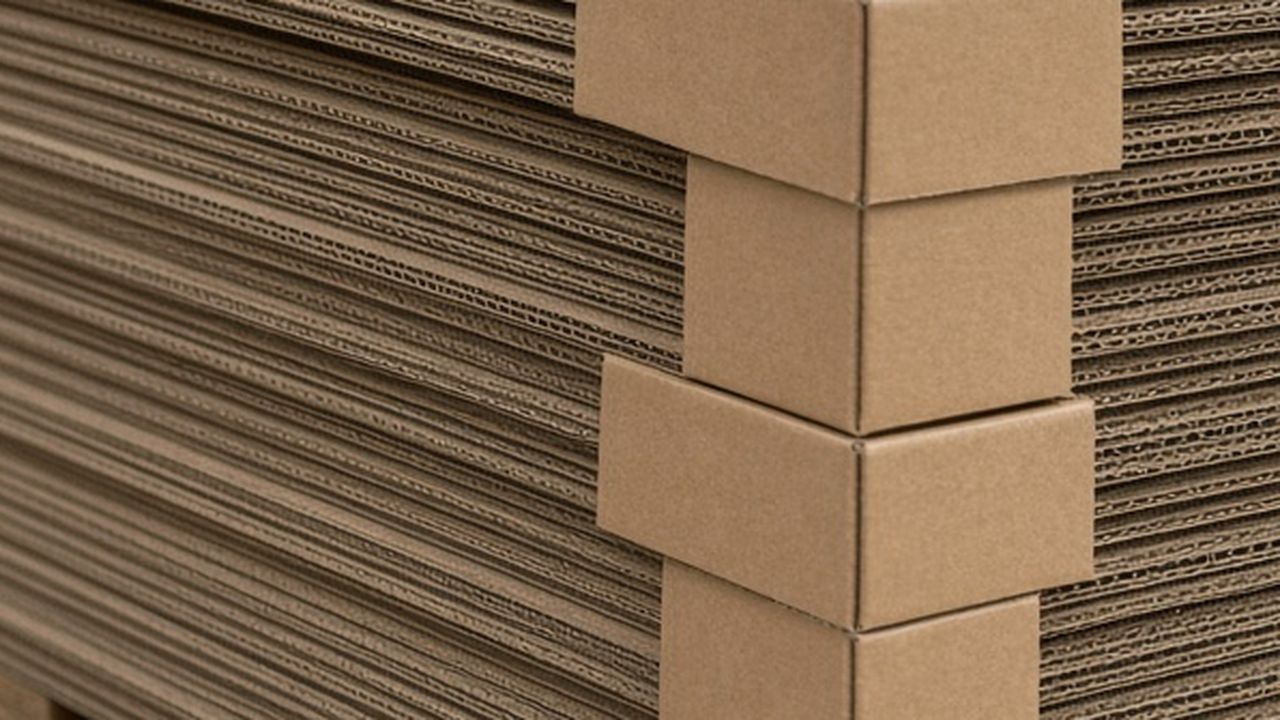
A layer pad is the thin sheet between tiers, about 2.5 mm, B flute, 125K/T. This topic is the build and the count, not a general packaging list.
Pads between the tiers is the build. Counting pads for a pallet is the number.
The sheet, and what it is not
Cardboard layer pads are also called pallet pads. They spread the tier above so the goods below are not loaded only on their corners. They do not wrap, they do not seal, and they do not cover a corner. Kraft at 88 gsm wraps. Corrugated paper on a roll wraps. Foam cushions glass and crockery. Polystyrene sheet is a different rigid board. Sheets that sit with a layer pad keeps those neighbours in their own jobs. A flattened carton used as a pad is a makeshift, not this product.
Cardboard layer pads and separating pallet layers are the product notes. A pad between pallet layers is the short article. The size has to cover the footprint of the tier you build. We do not publish one pad that fits every pallet. The category is the list of sizes.
Build in order. First tier, then a pad, then the next tier. Do not stack the pallet and try to slide sheets in afterwards. If a tier is uneven, fix the tier. A pad will not make mixed heights flat. Stretch wrap holds the finished load. It is not a substitute for the sheet, and a warehouse that only wraps will crush the lower corners.
The count is the gaps
Four tiers give three gaps. That is three pads if you sheet every gap and nothing else. A sheet under the first tier and a sheet on top are extras, and they change the number. Say the sentence before you buy: every gap, or every gap plus top and bottom. Counting pads for a pallet writes this out. Then multiply by the pallets you build, subtract what is already on the shelf, and add a small reserve for the delivery spread.
Different footprints are different sizes even when the tier count matches. Add them as separate lines. Edge guards are not in the pad number. Four corners are four guards, more if you protect the vertical edges. Edge and corner protection lists cardboard edge guards, Jiffy foam edge guards, Jiffy foam corners and polystyrene corners. Edge guards for a pallet is the buying note. A pad folded over a corner is not a guard.
Recount when the goods get taller and a tier disappears, even if the carton quantity is unchanged. A standing order that never looks at the pallet keeps buying last year’s gaps. Damaged sheets do not count as stock. Pads that walk off to other benches have to be in the number or the habit has to stop.
Having the sheets before the pallet starts
Pads are flat and easy to forget until the pallet is half built. Order them with the guards when you use both. Orders placed by 3pm leave the same day. The aim is 5.30pm the next working day, and a 1 to 3 day courier is also described. Friday aims for Monday. A bank holiday moves that. UK delivery is free over £50 ex VAT. The reserve on the shelf should cover the later of those, or the order should be earlier in the week.
TradePro, for trade businesses, starts at 5% and goes to 10% over £1,000 a month, with BACS. The pad line is often small next to cartons or tape. It still belongs on the order when the shelf says so. A discounted month without pads is a month of crushed tiers. Stocked sheets of the wrong footprint can be returned within 14 days. Call and arrange it.
Write the size, the sentence about top and bottom, the pads per pallet and the pallets per week on one note. Change the sentence when the build changes. The purchase order is the last edit, not the first. This topic is that note, with the guides for the sheet and the guard beside it.
Looking at a finished pallet before you trust the note
Before the note becomes a standing order, stand in front of one finished pallet and count the sheets you can see, including any under the goods and any under the wrap. The number you count is the number the sentence should produce. If it does not, the sentence is wrong, not the pallet. Pads between the tiers describes the build you should be looking at. Counting pads for a pallet is the arithmetic to correct.
Check the corners on the same visit. If a guard is fitted, it belongs on the guard line, in the profile you actually used: cardboard edge, foam edge, foam corner or polystyrene corner. Edge guards for a pallet names those. If no guard is fitted and the corners are undamaged, do not add guards “because the range exists”. If the corners are crushed and no guard is fitted, the pad count is not the thing that will save the next pallet.
Then leave the note alone until the goods, the tier count or the footprint changes. A weekly edit is how the sentence drifts back to “about one per tier”. The pallet you counted is the evidence. Cardboard layer pads remains the size you buy. The evidence remains the reason the quantity is what it is. Order before 3pm when the shelf, not a guess, says the reserve is gone.
If two shifts build pallets, they need the same sentence. A night shift that skips the top sheet, or adds one the day shift does not, will make the shelf count look like theft. Agree the build, write it once, and treat a different build as a different note rather than a personal habit. The pads are too thin to argue about from memory at the end of a Friday. Count a pallet together once, and then stop recounting it every shift.